
Solids flow meters
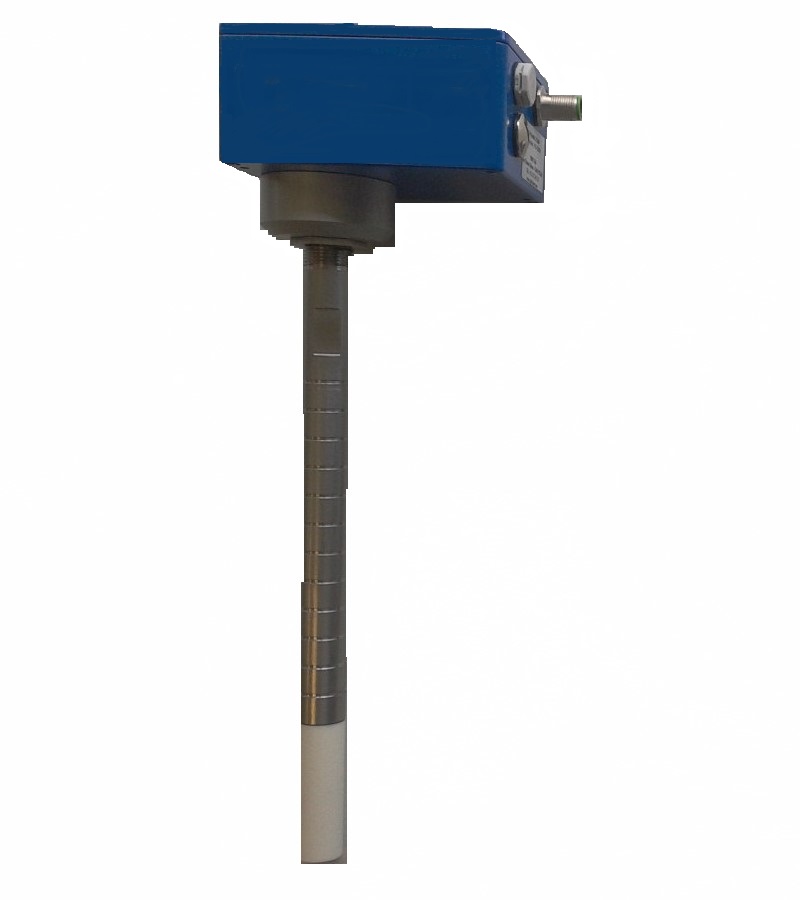
SF Meter Solids Flow Meter
A microwave flow meter for bulk solids in pneumatic conveying and free-fall lines. It measures powders, granules, flakes and chips from grams per minute up to tons per hour, with no contact with the material.

- For pneumatic conveying and free-fall processes, from grams per minute to tph
- Easy installation and start-up for flow ranges of 0 to 40 tph, depending on material
- Integral solids flow measurement for powders, granules, flakes, chips and more
- Installs on any tube or pipe diameter (chutes and ducts need to be reviewed)
- Long-term stable, reliable and robust
- Sensor supply for connections up to 1000 m (3,280 ft)
- Galvanically separated RS485 interface for PLC connection
- Analog 4–20 mA output, RS485 and alarm relay
Use
Where the SF Meter fits
The SF Meter (Solids Flow) uses the Doppler effect. A microwave signal is emitted, generating an electromagnetic field inside the pipe. Particles moving through this field produce a signal that varies in amplitude and frequency.
Dynamic flow
The flow rate is derived from a mathematical analysis combined with a calibration against real measurements.
Flow / no flow
A threshold can be set anywhere between 0 and 100% of flow. A switch is activated when the sensor detects flow above or below the fixed threshold.
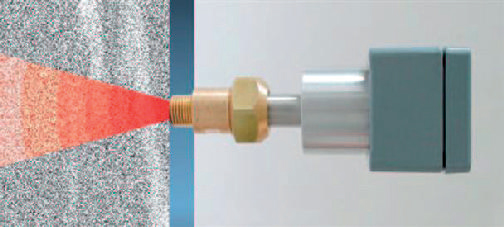
Function
Compensation for changing process conditions
Beyond the working principle, the technology developed for the SF Meter lets it compensate for variations in:
- Concentration
- Particle speed
- Particle size distribution
- Temperature
The result is better precision, better repeatability and better stability over time.
- Contactless measurement
- Very easy to use
- No maintenance
- No remote electronics to handle
Mounting and installation
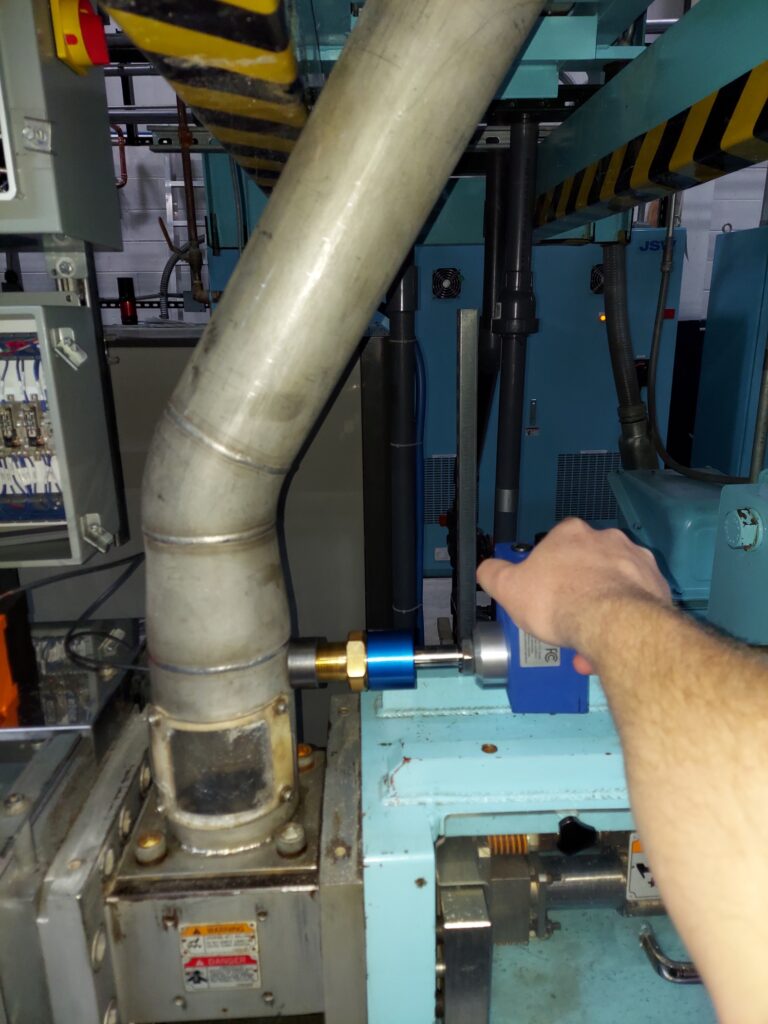
Sensor mounting procedure
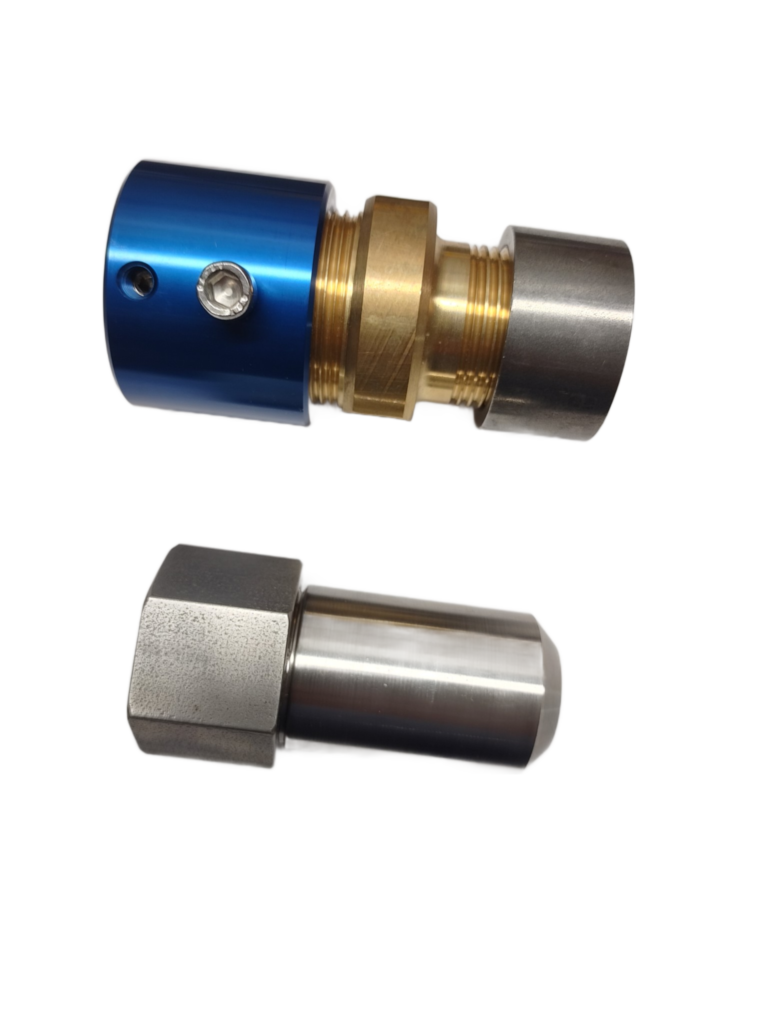
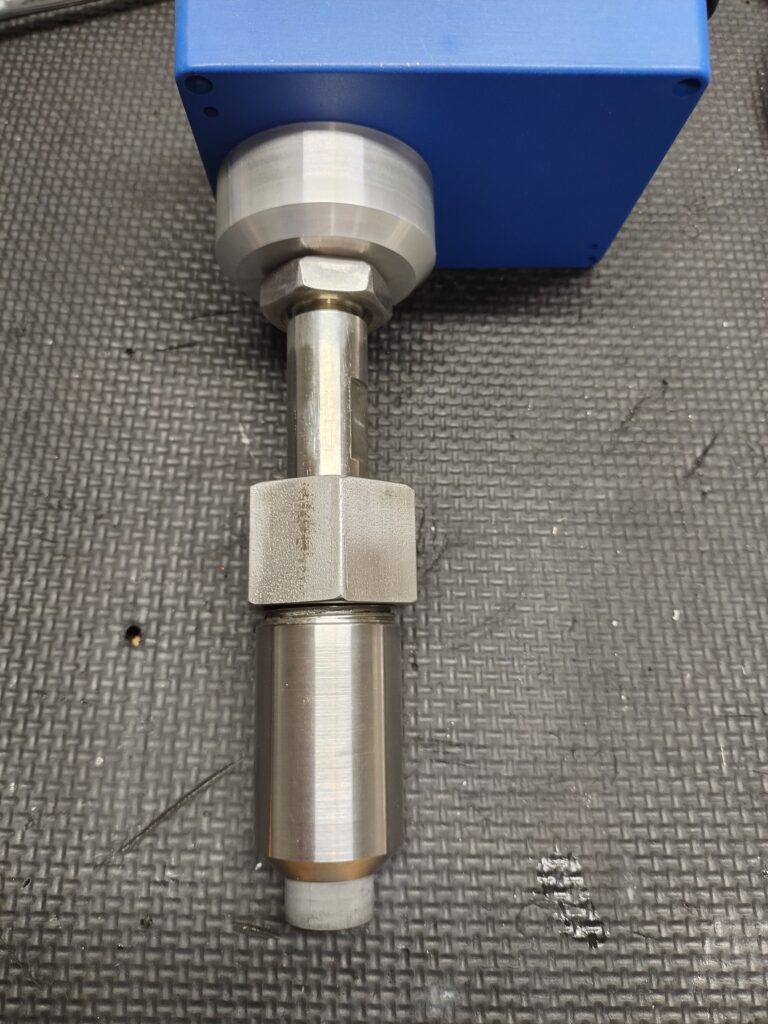
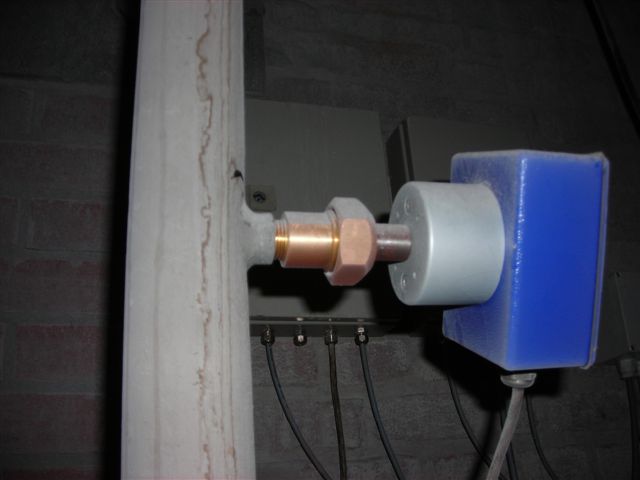
- Position the circlip on the waveguide to suit the combined depth of the bushing, valve, bracket and pipe wall. For best results the sensor head should sit flush with the inside of the pipe, or slightly inside it. Use a depth gauge to find the exact depth.
- Unscrew the headless screws on the blue holder bracket.
- If a valve is fitted, open it so the waveguide can pass through.
- Insert the waveguide sensor to the correct depth.
- Secure the sensor with the screws.
Technical data
SF Meter specifications
Transcribed from the product brochure, with converted units added. Confirm critical values against the brochure PDF.
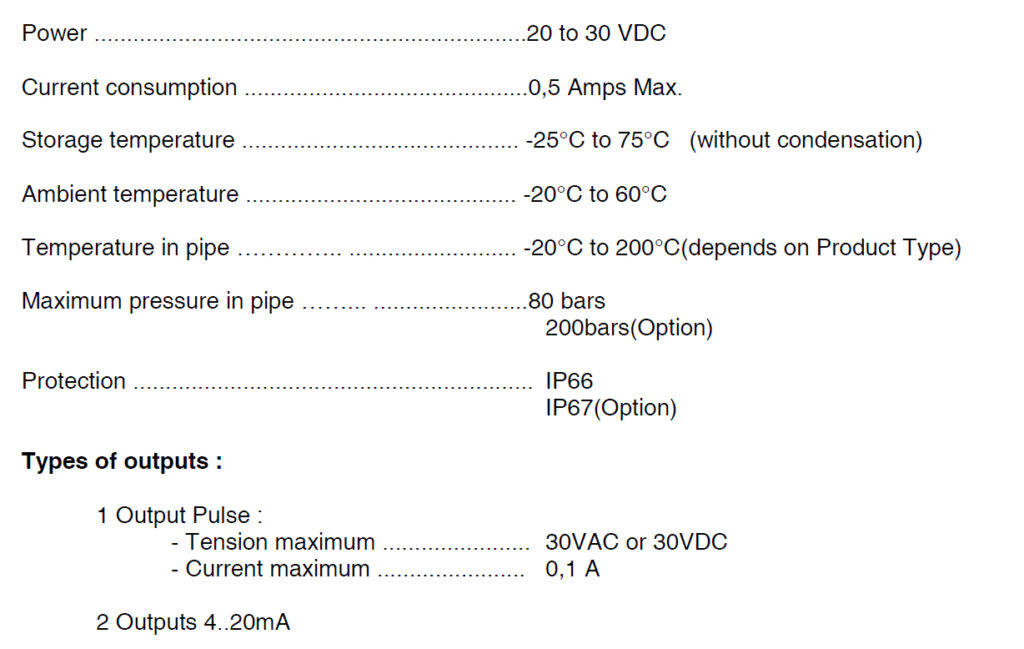
| Ambient temperature | −20 to +60 °C (−4 to +140 °F) |
|---|---|
| Product temperature | −20 to +70 °C (−4 to +158 °F), standardVersion with special waveguide: up to 200 °C (392 °F) |
| Protection rating | IP66 |
| Pressure | Less than 80 bar (1,160 psi) |
| Housing | Aluminium or stainless steel, depending on model |
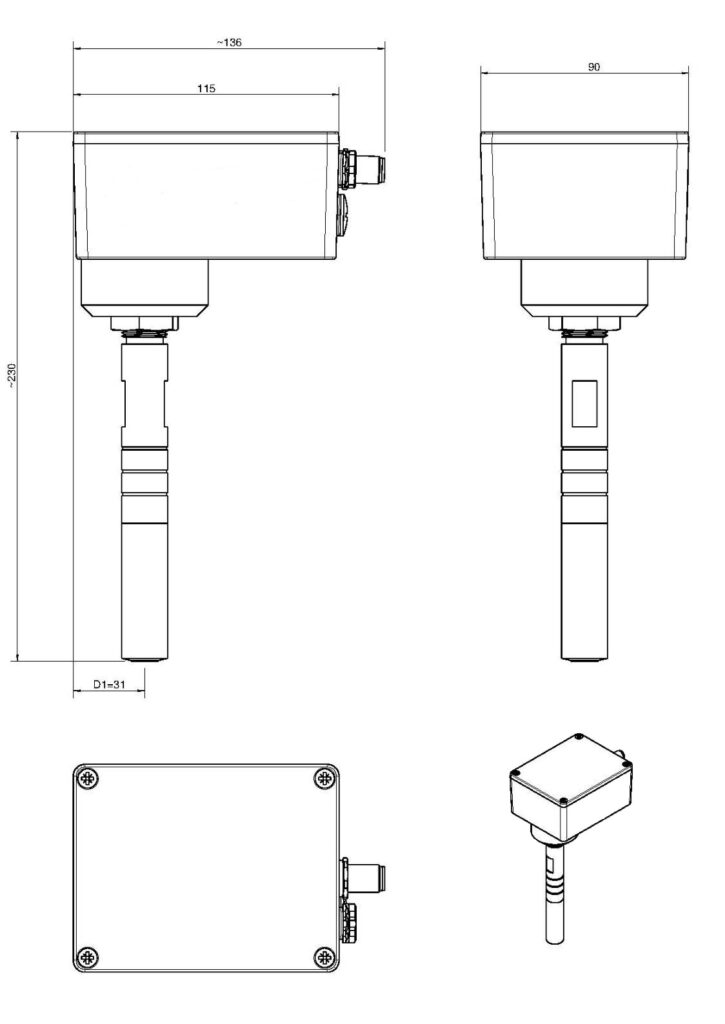
| Dimensions | L 134 × W 90 × H 152 to 350 mm (5.3 × 3.5 × 6.0 to 13.8 in) |
| Weight | 1.2 kg (2.6 lb) |
| Power supply | 24 V DC ±10% |
| Cable supplied | M12, 8-pin, 5 m (16.4 ft) |
| ATEX version | II 1/2 D |
| Dynamic flow outputs | 2 analog outputs, 0/4–20 mA, load 500 Ω1 impulse output on externally supplied relay, max. 300 V AC or DC, current limited to 100 mAOptional Modbus |
|---|---|
| Flow / no flow output | 1 relay output, max. 30 V AC or DC, 80 mA |
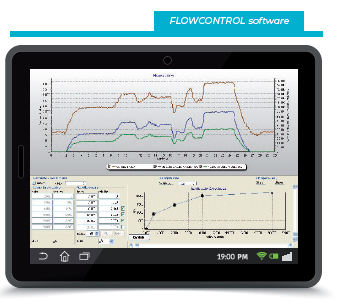
| FLOWCONTROL software | Included, with 1.8 m (5.9 ft) USB cable |
|---|---|
| Languages | French, English |
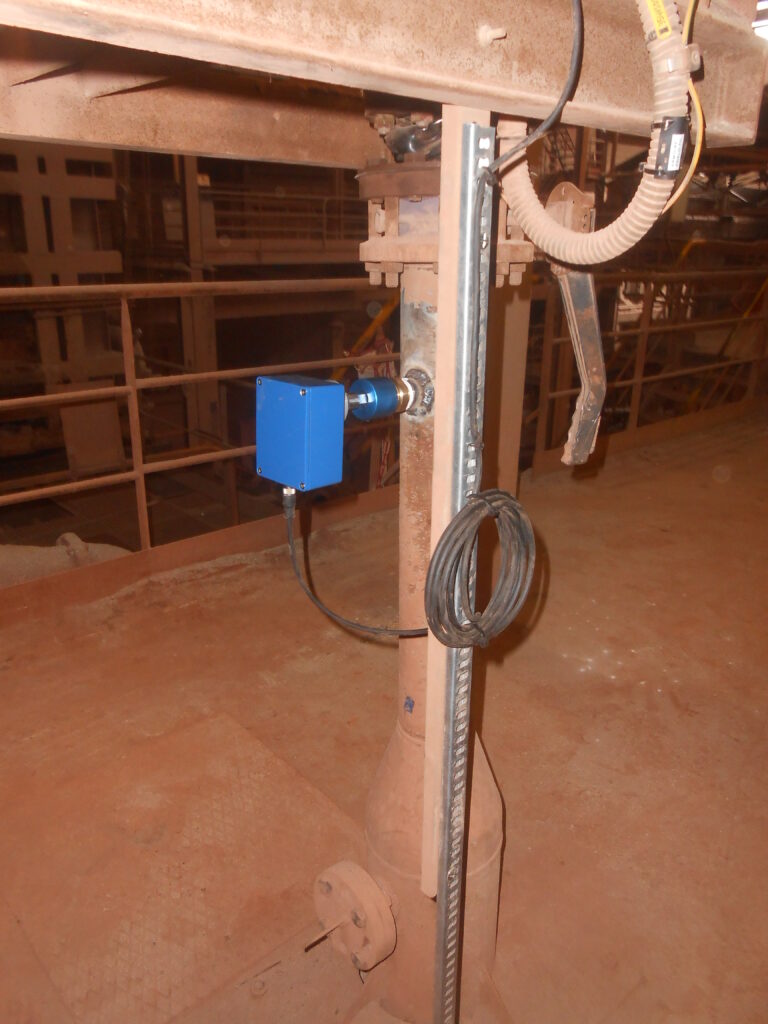
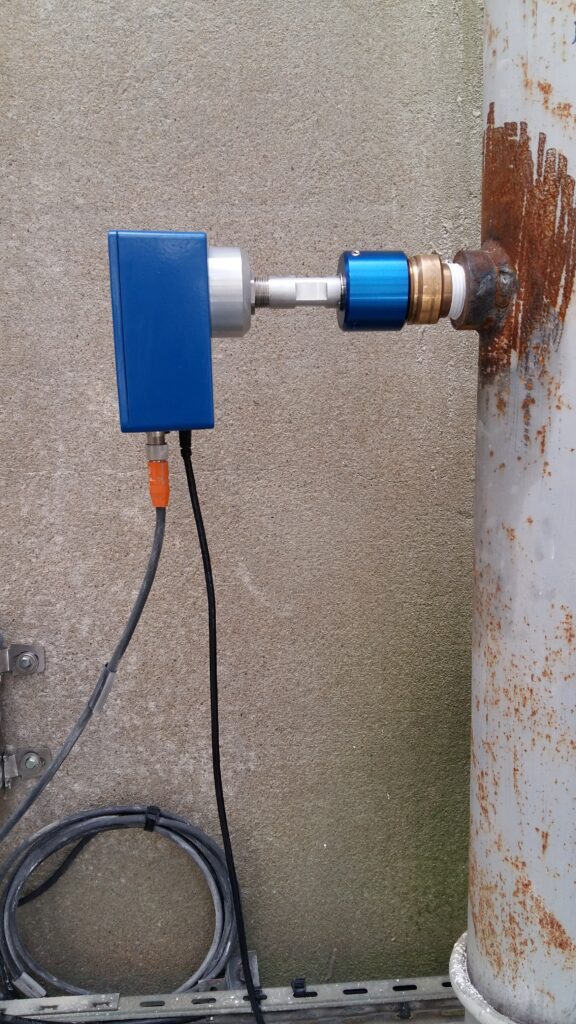
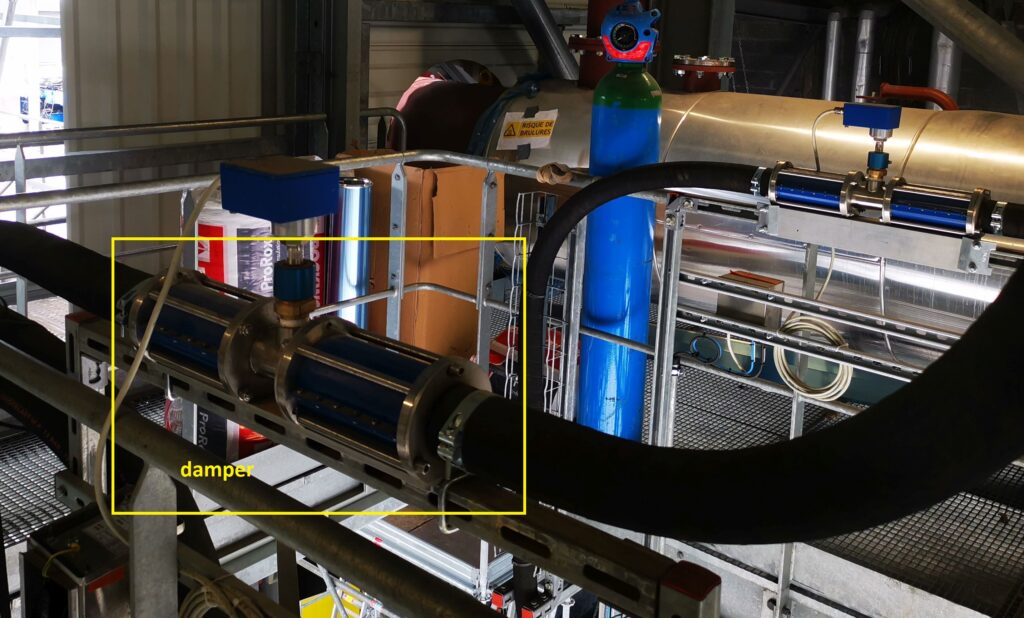
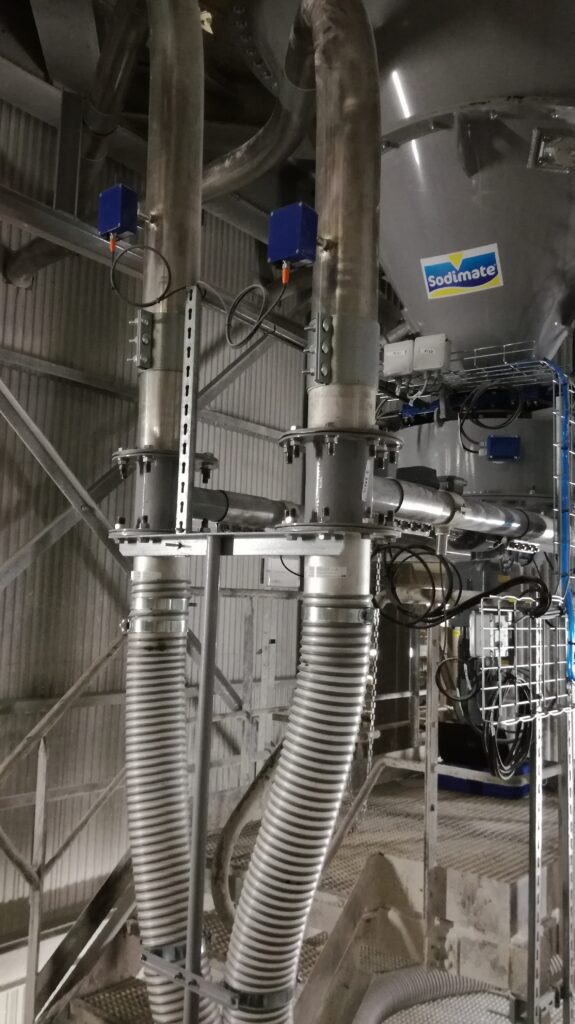
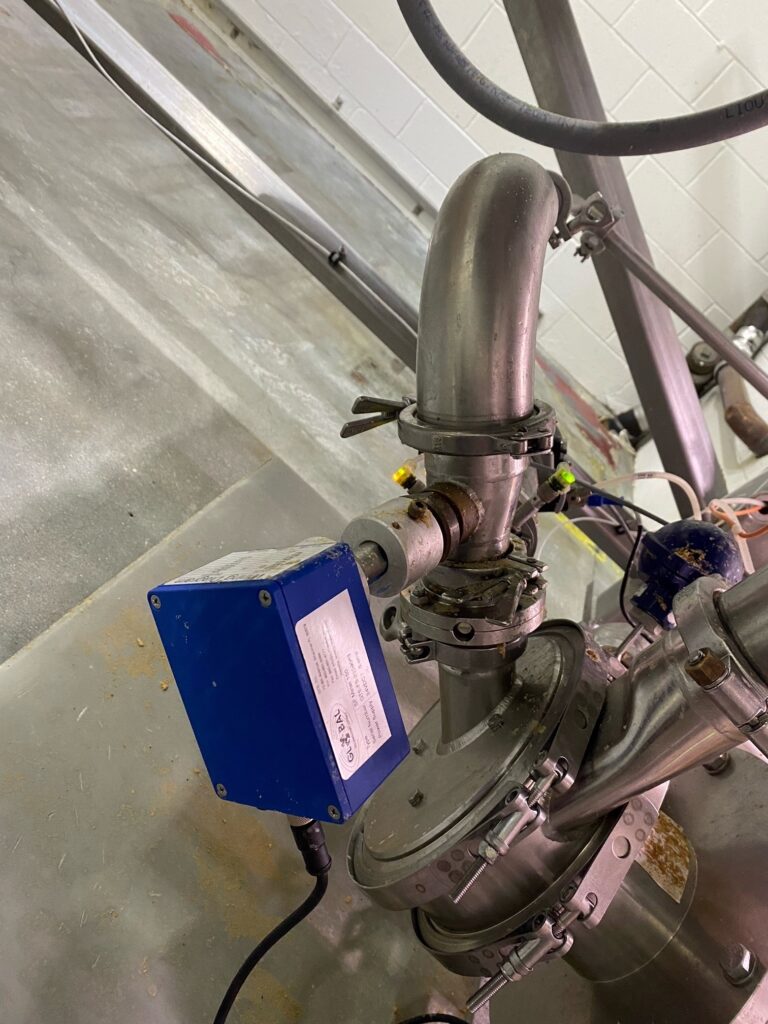
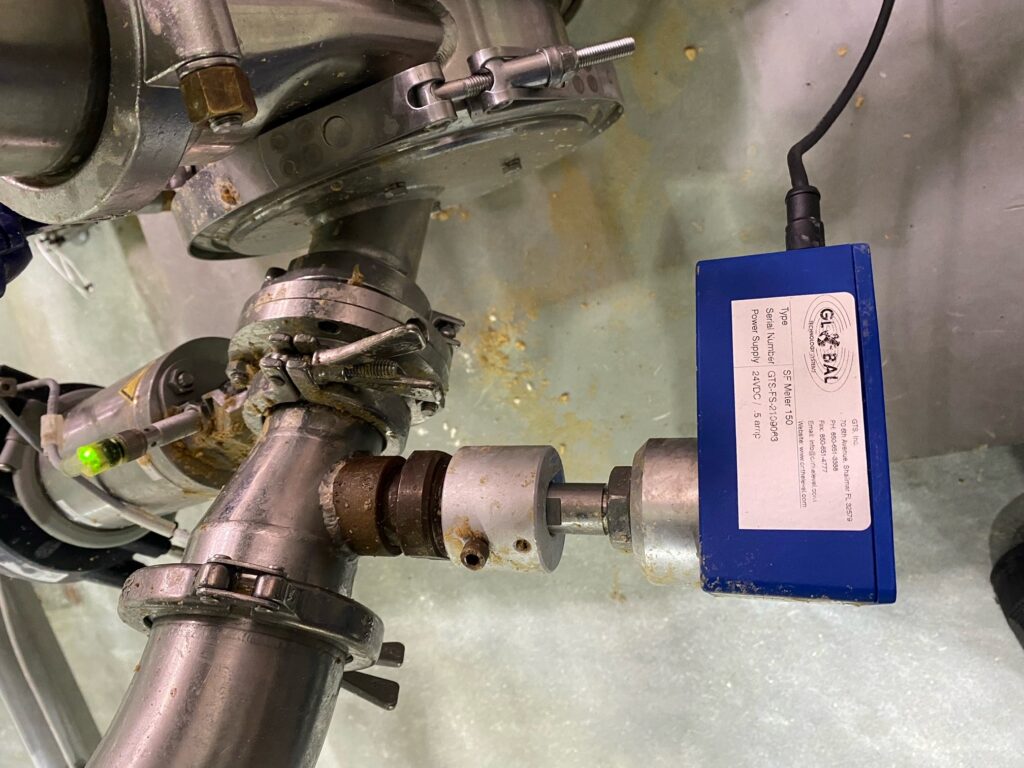
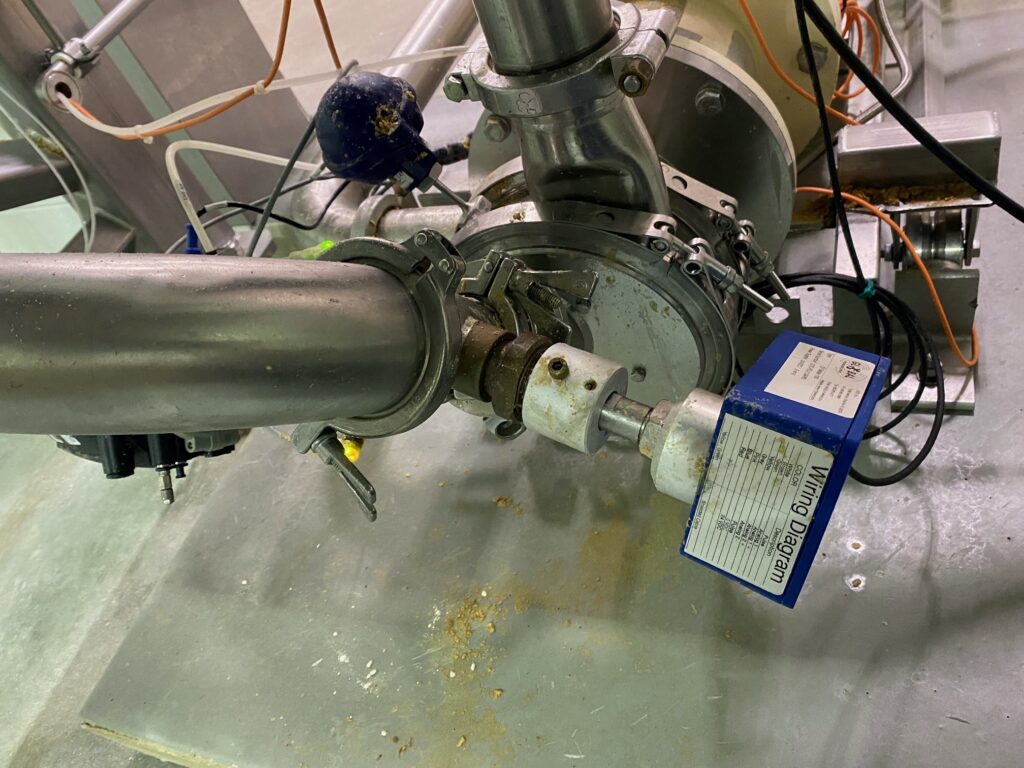
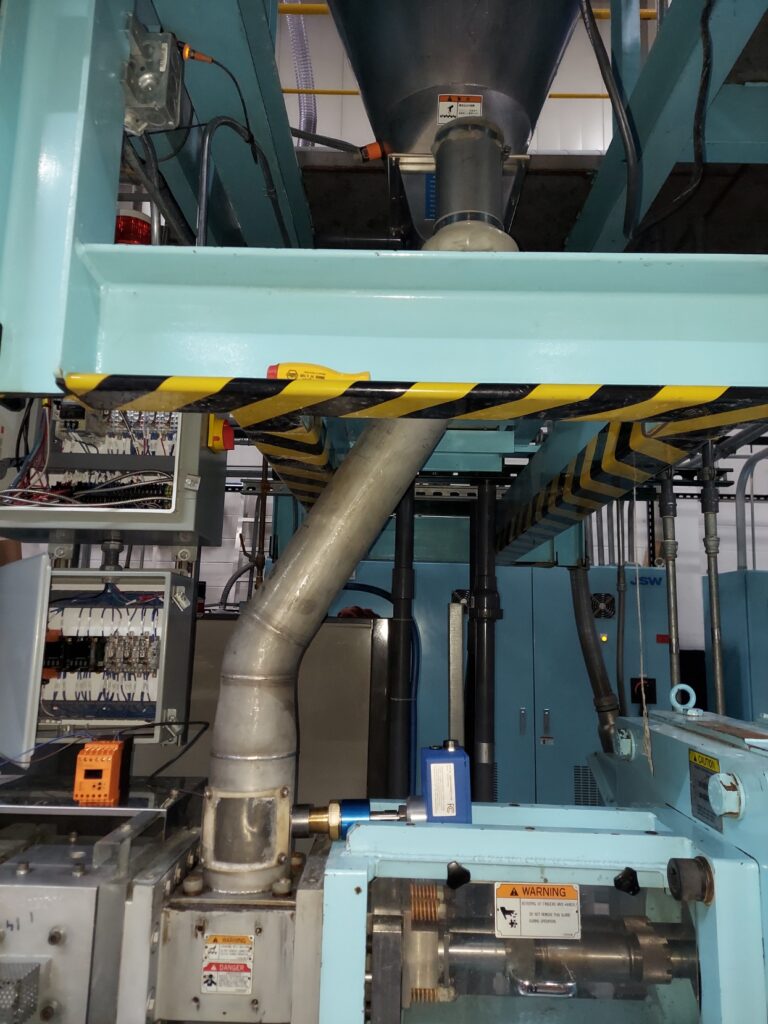
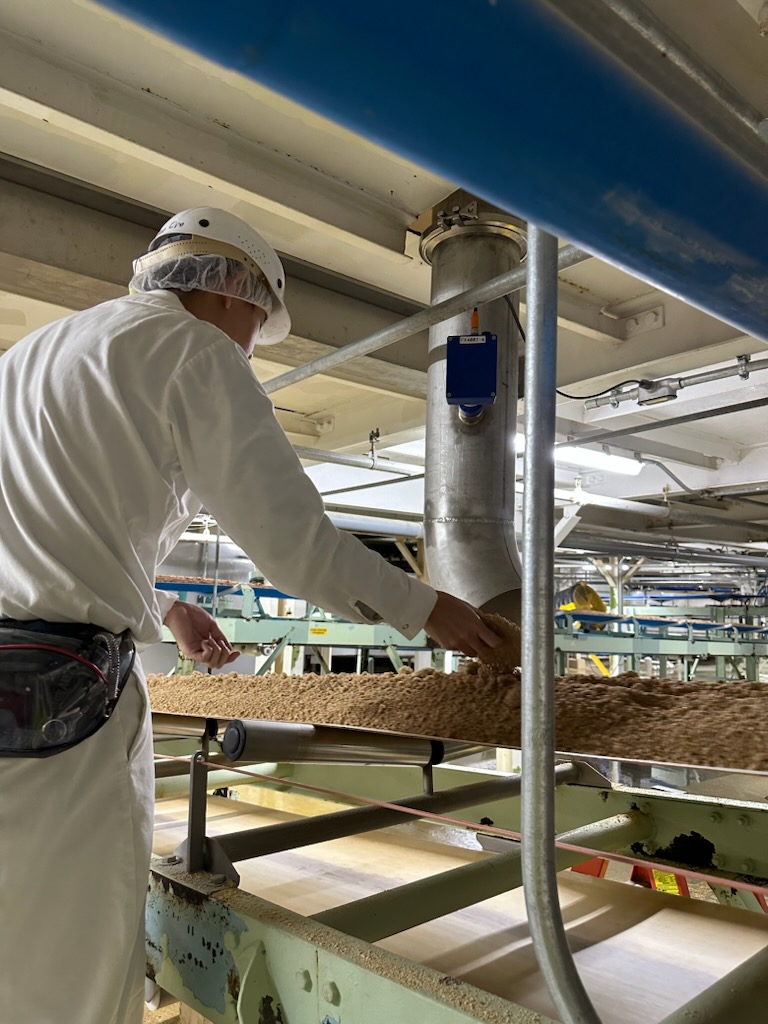
Application examples
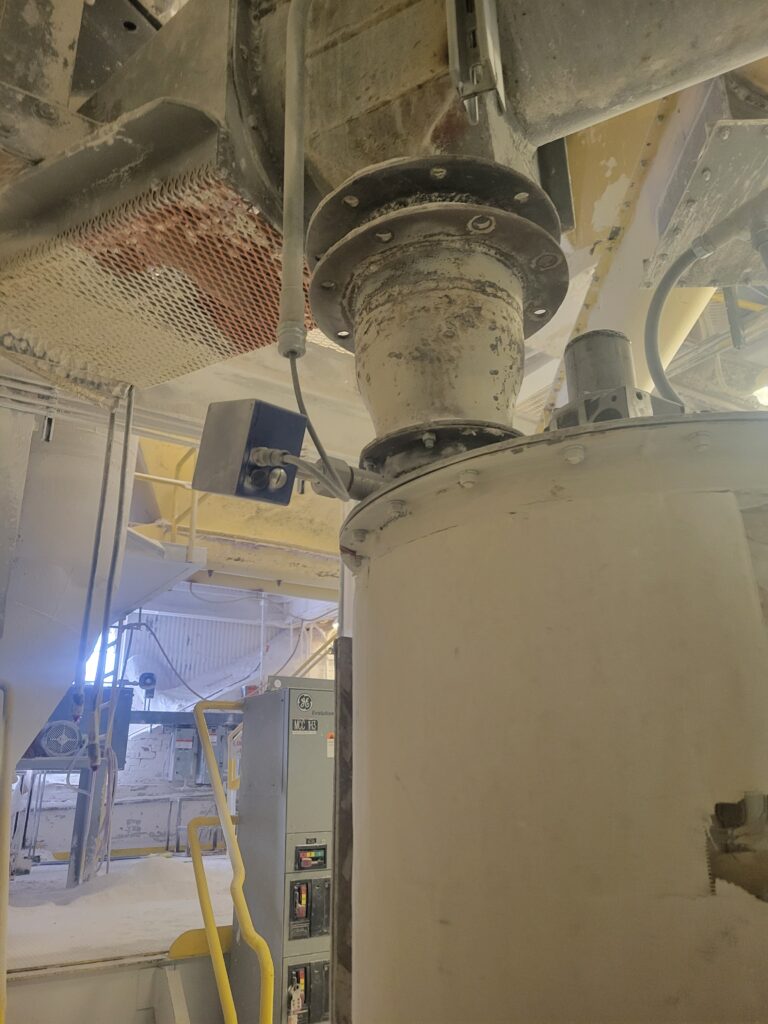
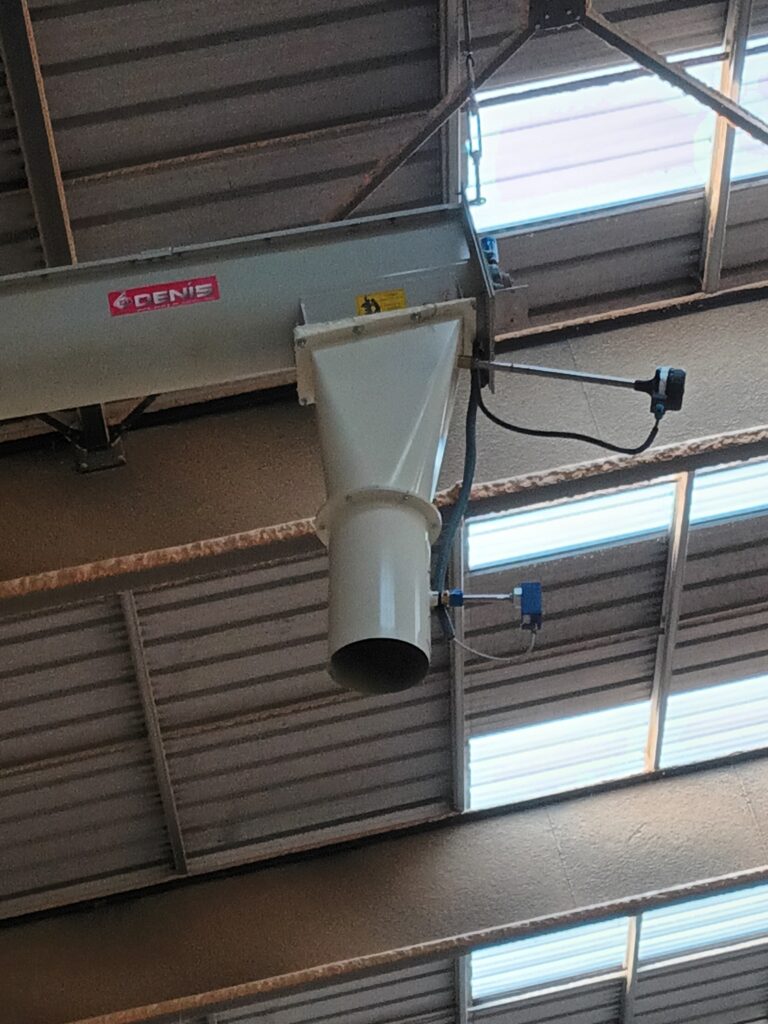
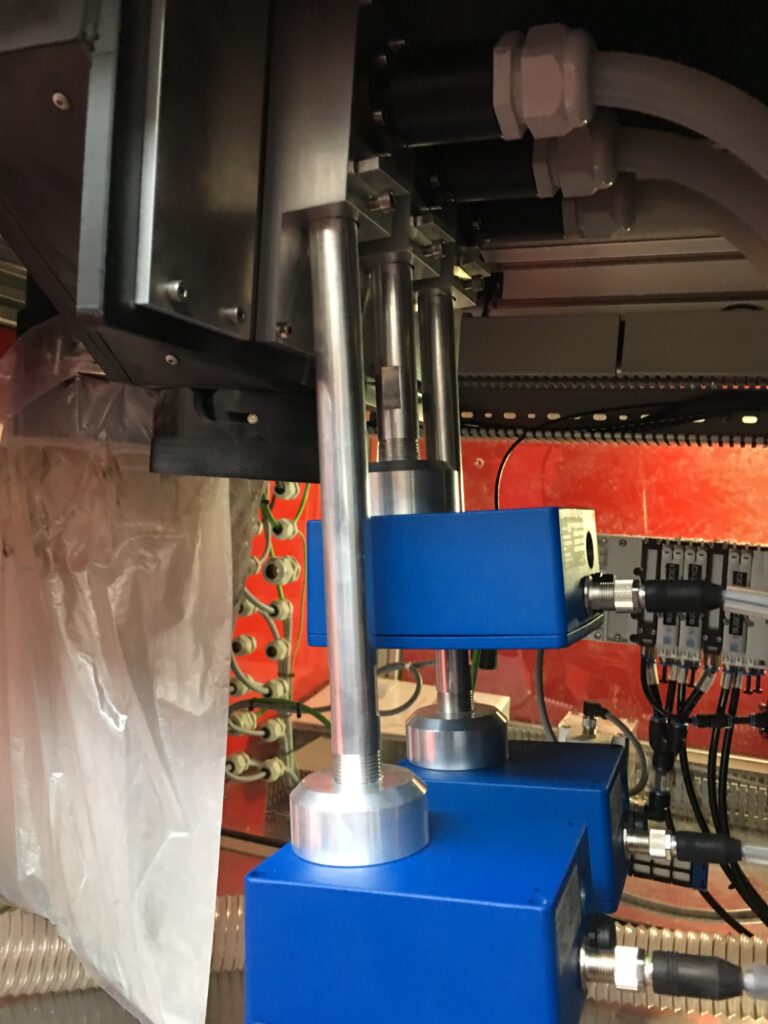
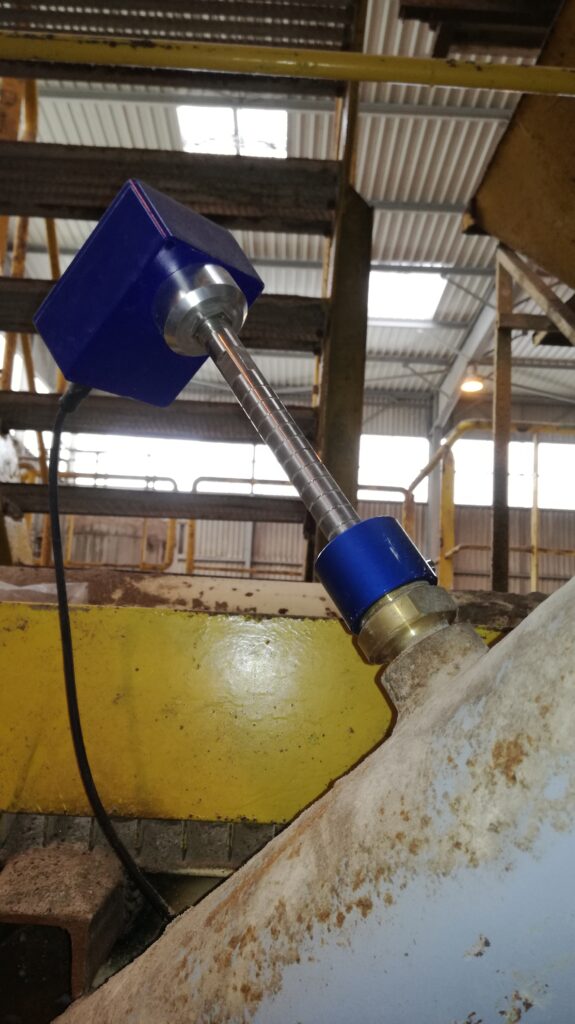
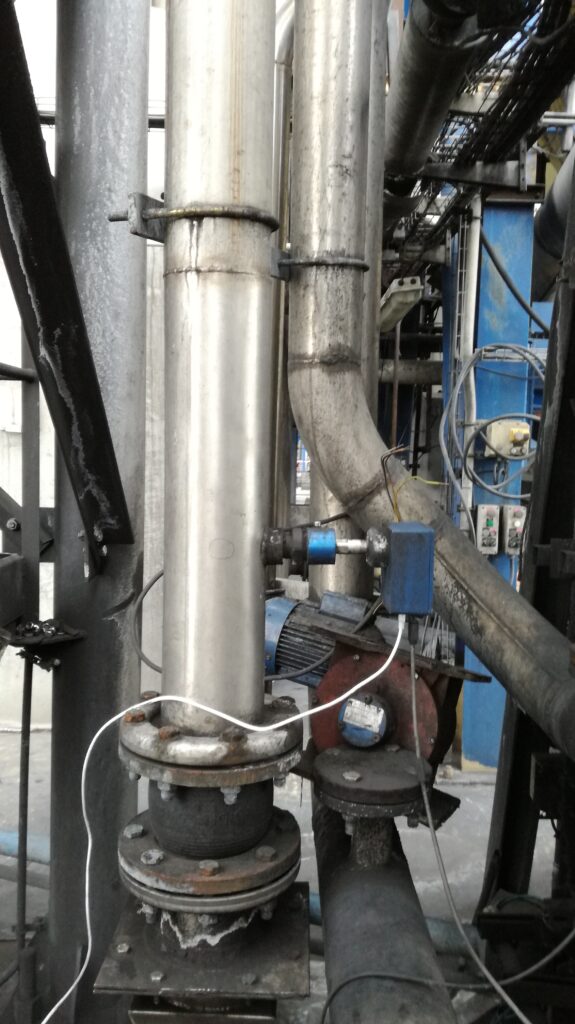
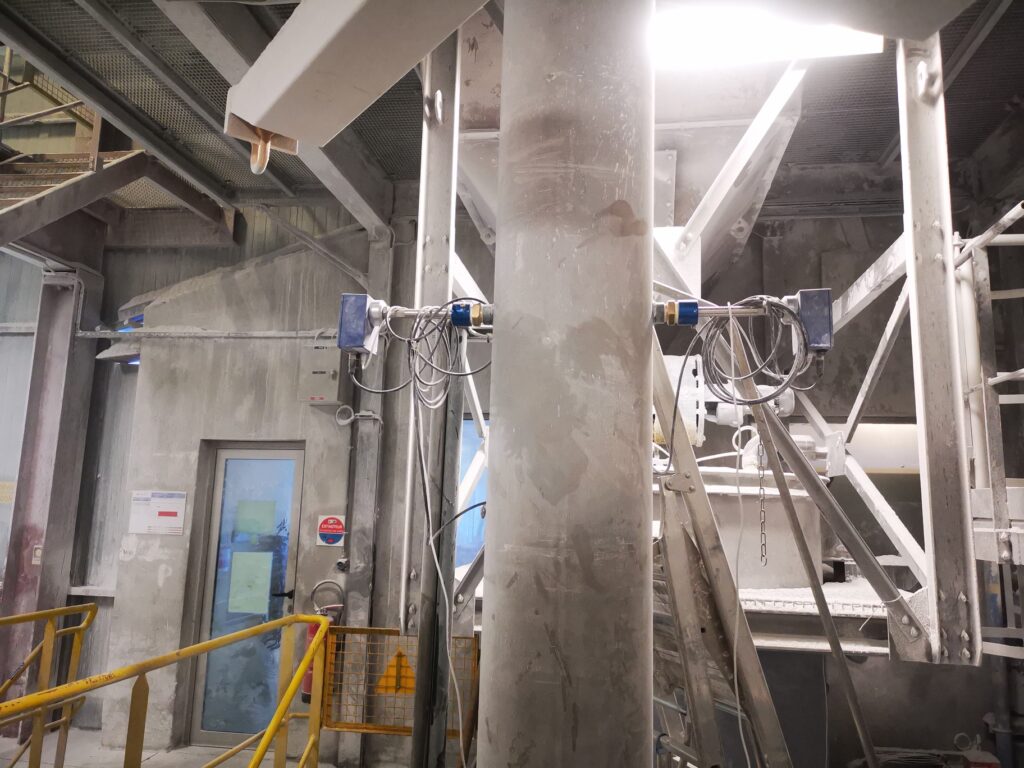
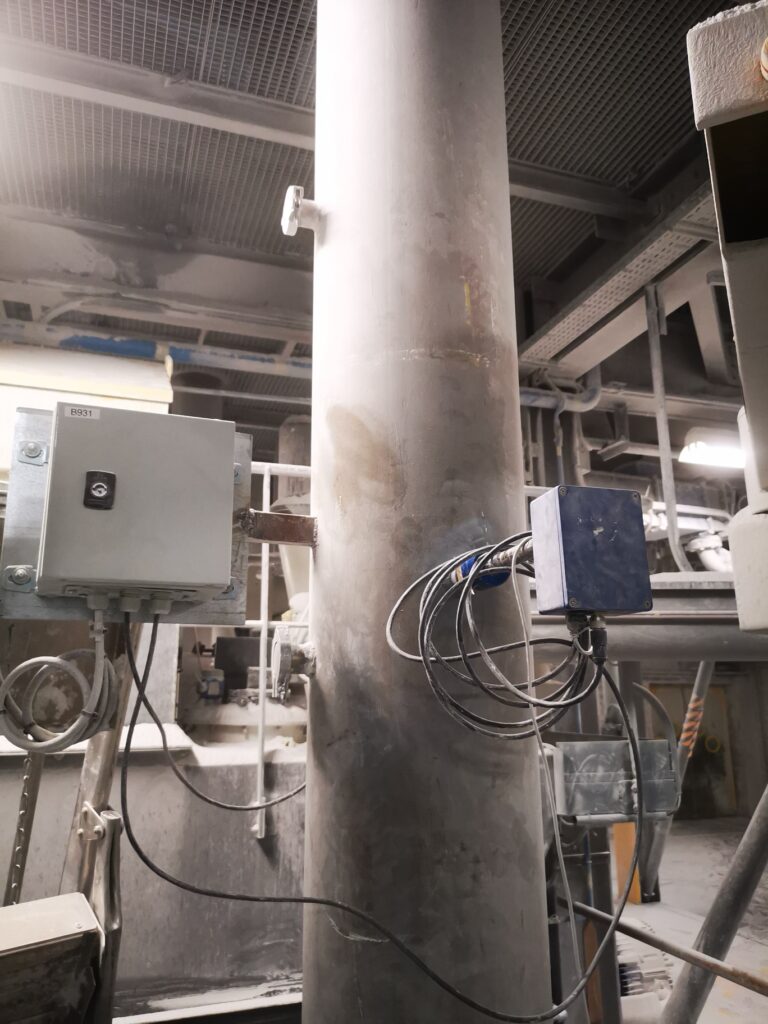
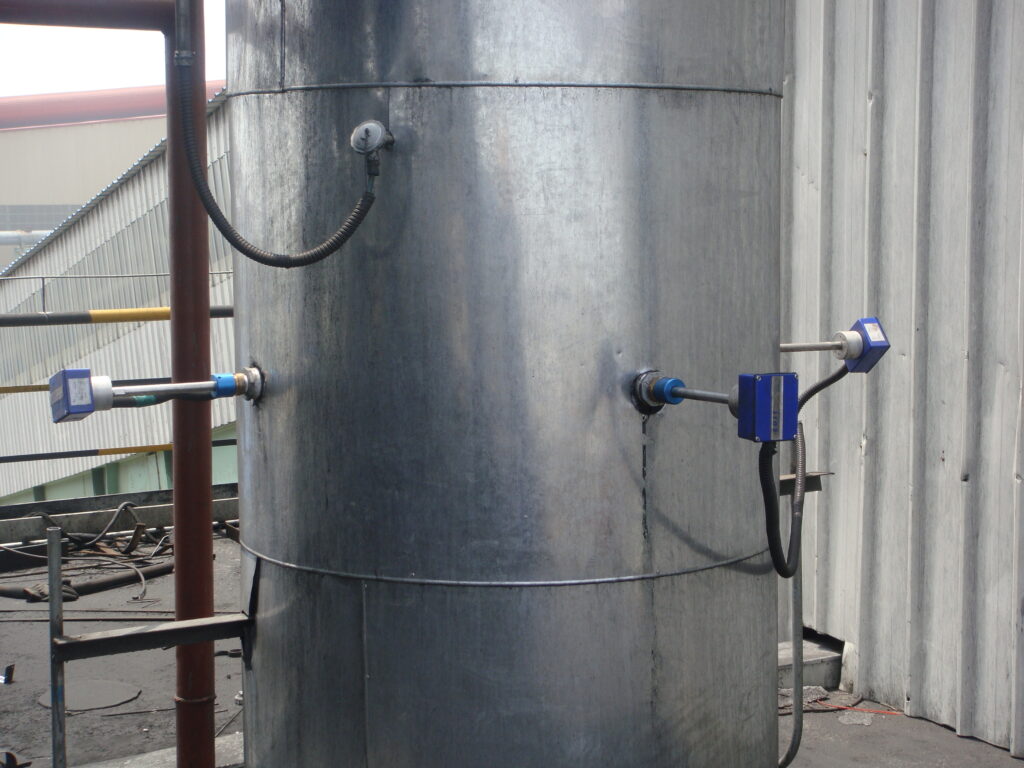
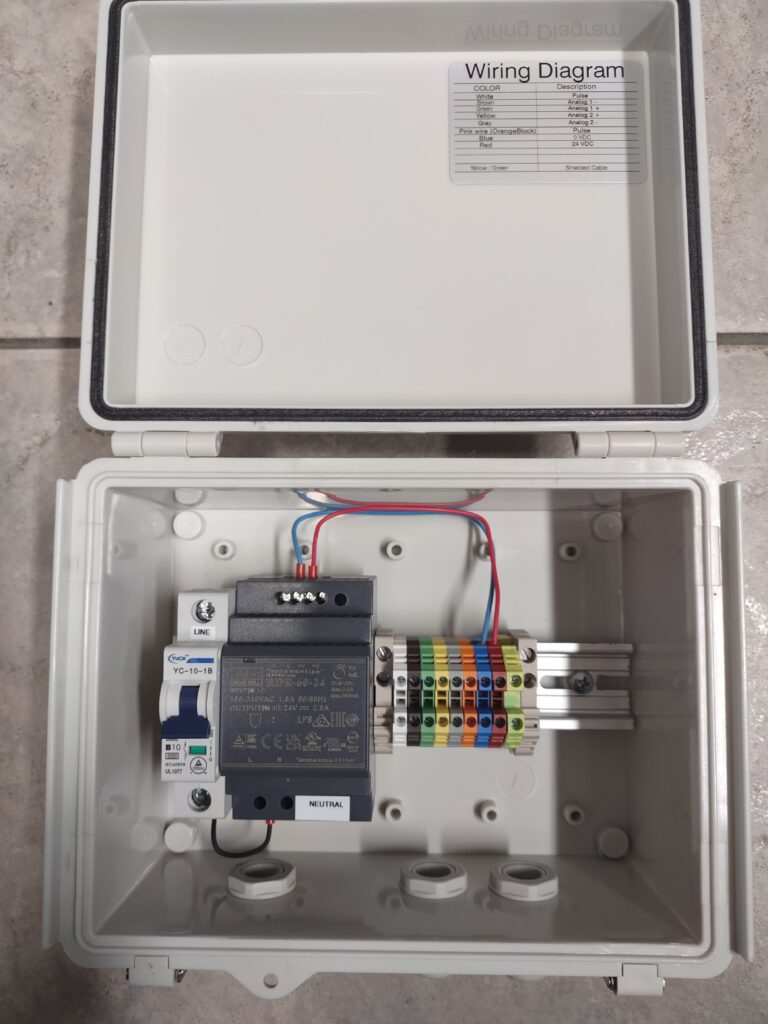
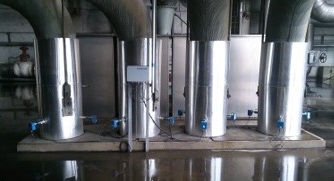
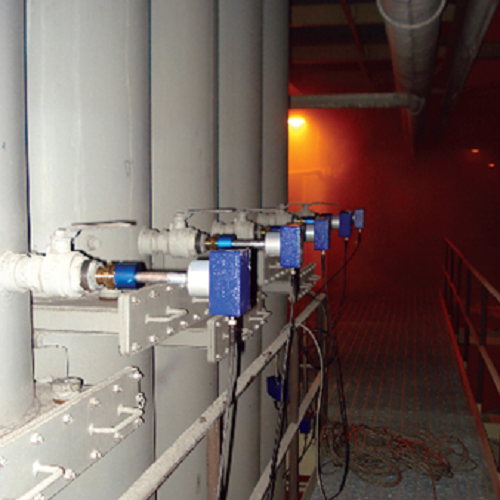
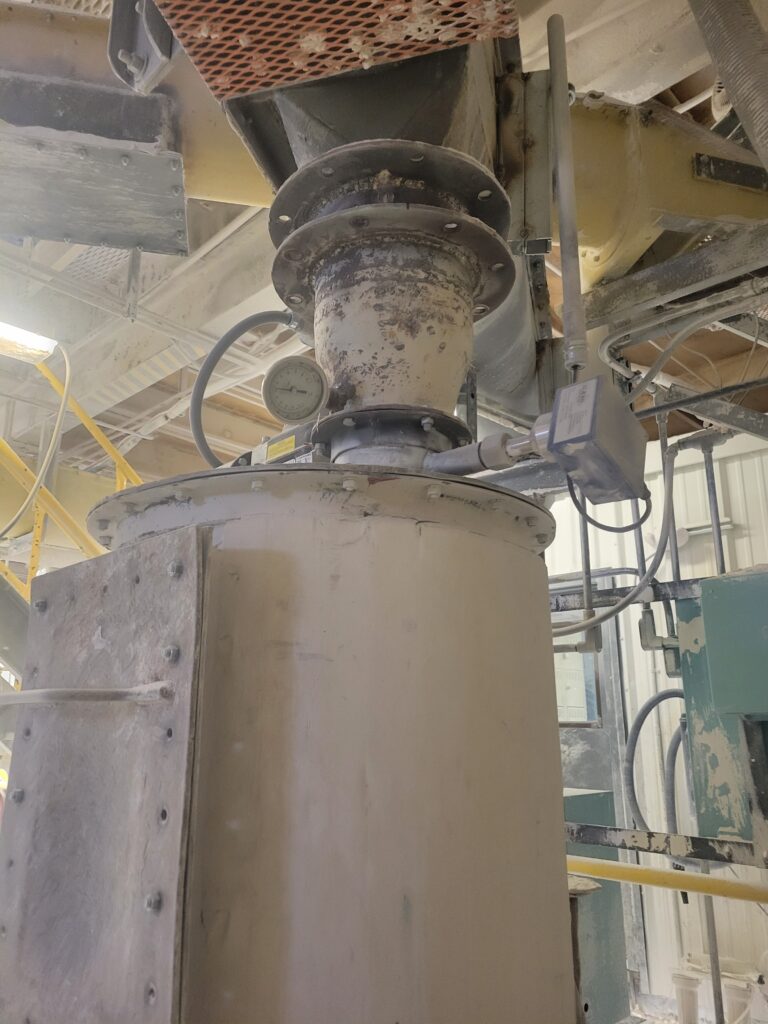
SF Meter in real processes



Common questions
SF Meter FAQ
How does the SF Meter measure solids flow?
It uses the Doppler effect. A microwave signal creates an electromagnetic field inside the pipe, and particles moving through it produce a signal that varies in amplitude and frequency. The flow rate comes from analysing that signal against a calibration made with real measurements.
What materials can the SF Meter measure?
All types of powders, granules, flakes and chips, in pneumatic conveying and free-fall processes.
What flow range does the SF Meter cover?
From grams per minute to tons per hour, with flow ranges of 0 to 40 tph depending on the material.
What pipe sizes can the SF Meter be installed on?
Any tube or pipe diameter. Chutes and ducts need to be reviewed first.
What outputs does the SF Meter provide?
An analog 4–20 mA output, a galvanically separated RS485 interface for PLC connection, and an alarm relay.
Can the SF Meter be used as a flow / no flow switch?
Yes. A threshold can be set between 0 and 100% of flow, and a switch is activated when flow goes above or below it.
Talk with GTS
Is SF Meter right for your material?
Tell us what you're conveying, the pipe size and how it moves. We'll confirm whether SF Meter fits or recommend a better measurement principle.