
Flow / no flow detection
FNF Flow / No Flow Detector
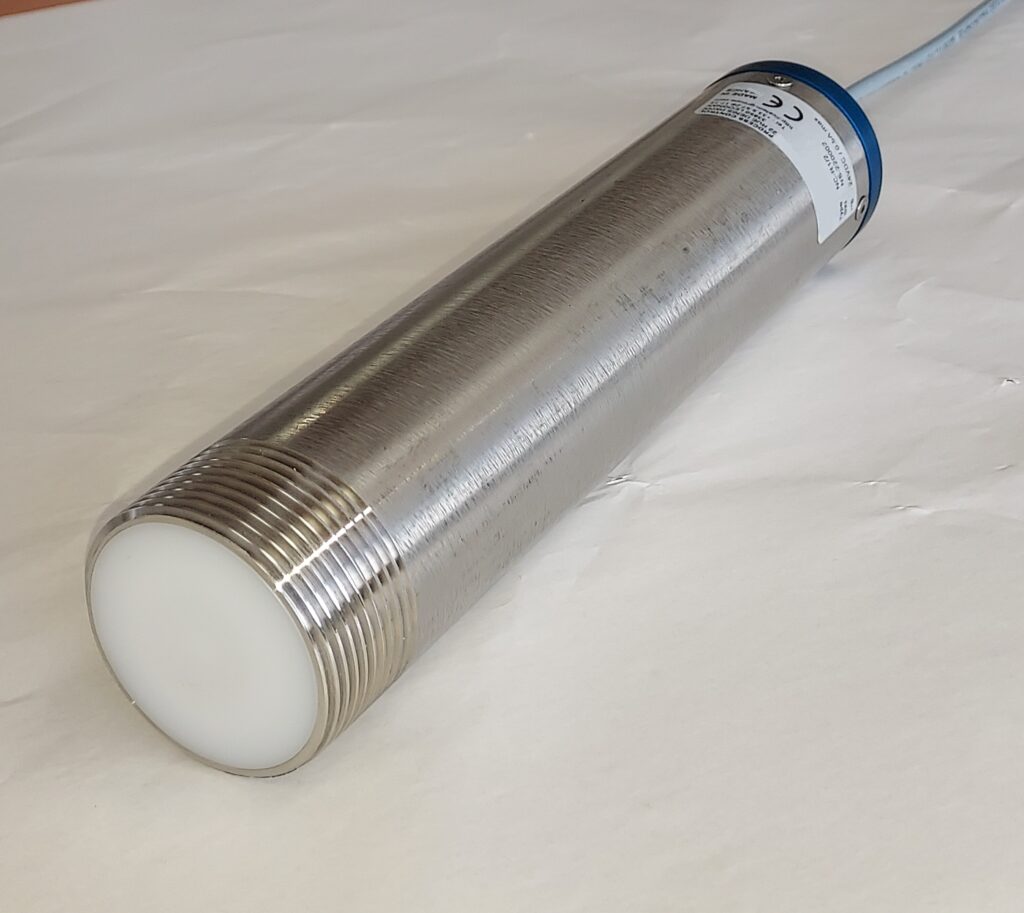
Solids flow detection made simple. The FNF (Flow No Flow) is a microwave Doppler sensor for detecting solids flow in closed metal pipes, installed through a welded half-bushing.

- Easy installation: fits any pipe or chute with a welded half-bushing
- Reliable operation: unaffected by dust or harsh environments
- Flexible configurations: alarm on level, band or hysteresis detection modes
- User-friendly software: configure and calibrate with Flow32
Use
Where the FNF fits
The FNF is designed for detecting solids flow in closed metal pipes. It is easy to install and suits all types of pipes.
Function
How the Doppler measurement works
The FNF is based on the Doppler effect. It generates an electromagnetic field in the pipe. A particle passing through reflects part of the emitted signal, and the sensor measures that reflection to determine the flow of material through the pipe.
The housing is rated NEMA 4X (IP 66). See NEMA enclosure types for what that rating covers.
Mounting and installation
Mounting position and tools
Equipment needed
- A drill
- A spanner or adjustable wrench, SW 18
- Welding equipment
- A depth gauge
Position rules
- Do not mount the sensor directly before or after a bend.
- On free-fall pipes, keep at least 1 m (3.3 ft) from the falling point.
- Mount at least 0.5 m (1.6 ft) above the bottom of the conduit, so product rising in the conduit doesn't affect the sensor.


Technical data
FNF specifications
Transcribed from the product brochure. Confirm critical values against the brochure PDF.
| Measurement range | Up to 3 ft (1 m) |
|---|---|
| Principle | Microwave Doppler |
| Ambient temperature | −4 to 140 °F (−20 to 60 °C) |
|---|---|
| Process temperature | −4 to 302 °F (−20 to 150 °C) |
| Process pressure | 0 to 1,160 psi (0 to 80 bar) |
| Protection class | NEMA 4X (IP 66) |
| Housing material | Aluminum |
|---|---|
| Sensor waveguide | Stainless steel (1.4571) |
| Dimensions | 134 × 90 × 152 mm L × W × H (5.3 × 3.5 × 6.0 in) |
| Mounting | Weldable half-bushing |
| Power supply | 24 V DC, max. 50 mA, under 2 W |
|---|---|
| Output | 1 × relay contact |
| Switching rating | 30 V AC/DC, max. 80 mA |
| Explosion rating | General purposeFNF EX option: ATEX Zone 20/21 |

Application examples
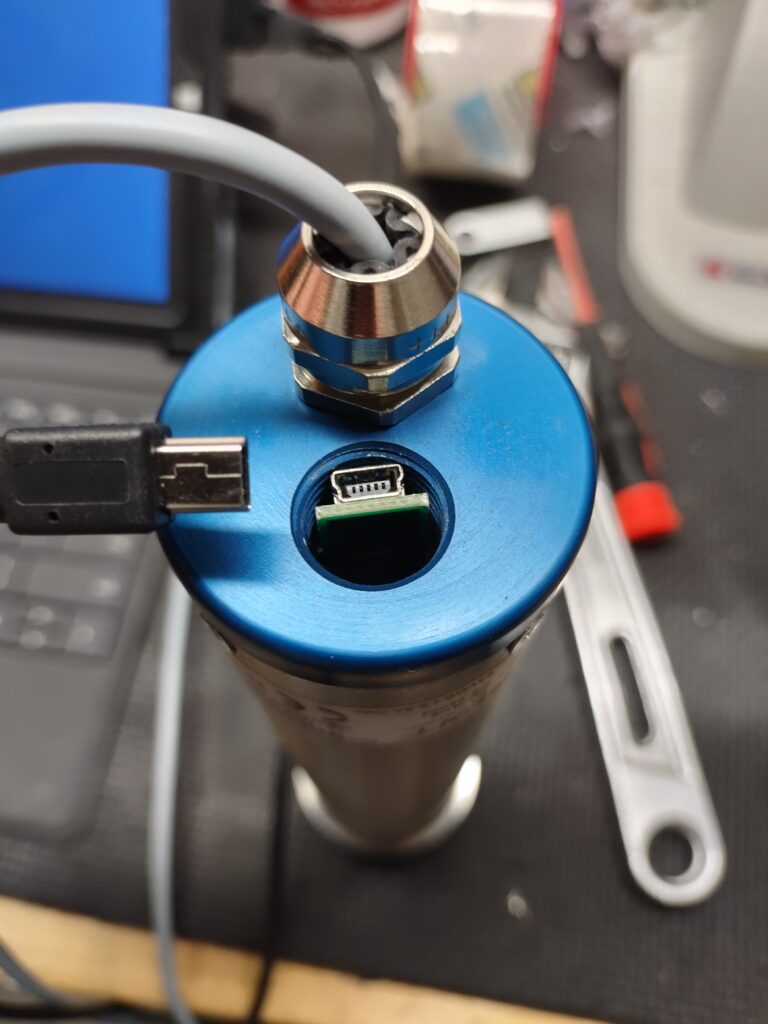
FNF hardware and software


Common questions
FNF FAQ
What is the FNF used for?
Detecting solids flow in closed metal pipes.
How does the FNF work?
It is based on the Doppler effect. It generates an electromagnetic field in the pipe, and a passing particle reflects part of the emitted signal, which the sensor measures.
How is the FNF installed?
With a welded half-bushing, which fits any pipe or chute. You need a drill, an SW 18 spanner, welding equipment and a depth gauge.
Where should the FNF be mounted?
Not directly before or after a bend. On free-fall pipes, keep at least 1 m (3.3 ft) from the falling point, and mount at least 0.5 m (1.6 ft) above the bottom of the conduit.
What alarm modes does the FNF offer?
Level, band or hysteresis detection modes, configured and calibrated with the Flow32 software.
What process conditions can the FNF handle?
Process temperatures from −20 to 150 °C (−4 to 302 °F) and pressures up to 80 bar (1,160 psi).
Talk with GTS
Is FNF right for your material?
Tell us what material is moving, the pipe size and the process conditions. We'll confirm whether the FNF fits or recommend a better option.