
Solids flow meters
Dmass Mass Flow Meter
A flow meter that measures the velocity and concentration of bulk solids at the same time to calculate mass flow, for dust, powders and granulates in pneumatic conveying or gravity-fed pipelines.

- For pneumatic conveying and free-fall processes, 1 to 500 tph
- High accuracy and repeatability
- Solids flow measurement for powders, granules, flakes and more
- Long-term stable, reliable and robust
- Sensor supply for connections up to 1000 m (3,280 ft)
- Options: high temperature, high pressure, food-grade liner, Teflon liner and more
- Three analog 4–20 mA outputs, RS485 and alarm relay
Use
Where Dmass fits
The Dmass is a flow meter used to determine the mass flow rate of bulk material. Almost any product, such as dust, powders or granulates, can be measured while it is transported in pneumatic conveying systems or by gravity in pipelines.
The device measures the concentration and the velocity of the bulk material in the pipeline at the same time. From these two values and the known diameter of the measuring pipeline, the mass flow rate is calculated and output through the evaluation unit.
Function
How the capacitive measurement works
The device measures the average velocity and concentration of gas-borne or falling solids without contact, across the whole cross-section of the transport channel.
The measurement is capacitive. The sensor surface sits in the sensor mechanics outside an electrically insulating pipe, for example GRP.
Statistical fluctuations in the particle flow generate a noise signal. This signal appears in a similar form on two sensor surfaces with a time offset, and that offset depends linearly on the particle velocity.
For a reliable measurement, no electrically conductive layer may form on the inner wall, for example from abrasion or moisture.

Mounting and installation
Setup and free-fall installation
The diagrams show the Dmass system setup and the installation recommendations for free-fall applications.


Technical data
Dmass specifications
Transcribed from the product brochure, with converted units added. Confirm critical values against the brochure PDF.
| Accuracy | Typically ±1–3% |
|---|---|
| Process temperature | Ceramic: max. 130 °C (266 °F)Optional high temperature: 150 °C (302 °F) |
| Pressure | Max. 64 bar (928 psi) |
| Ambient temperature | −20 to +60 °C (−4 to +140 °F) |
| Protection class | IP 68 (EN 60529) |
| Interference immunity | According to EN 61326-1 |
| Supply voltage | 24 V DC, max. 10 W |
| Damping | 1–30 s, fast adaptation to rapid changes of the value |
| Parameterization | Keypad or laptop |
| Cable length | Max. 1000 m (3,280 ft) |
| Nominal diameter | DN 10 to DN 200; larger diameters on request |
| Nominal pressure | PN 10, 16, 25, 40 or 64 |
| Housing material | Galvanized steel or stainless steel (1.4301 / AISI 304 standard) |
| Sensor pipe material | Glass fiber reinforced epoxy resin (standard); other materials including PTFE and PEEK |
| Electronic housing | Aluminium die casting, Ø 130 × 250 mm (Ø 5.1 × 9.8 in) |
| Certificates | ATEX: II 2G Ex d e IIC T4 GbII 2D Ex tb IIIC T130°C Db IP 68 |
| Display | 4-line LCD with function keys |
|---|---|
| Outputs and interfaces | 2 × analog output (4–20 mA), 3 × relay output, RS485, Ethernet |
| Measured values | Mass flow rate, concentration, velocity |

Application examples
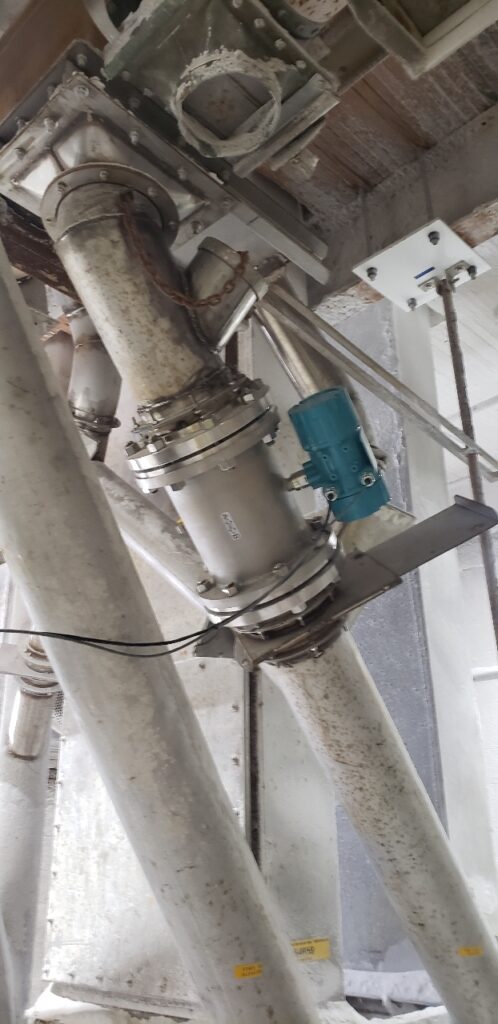
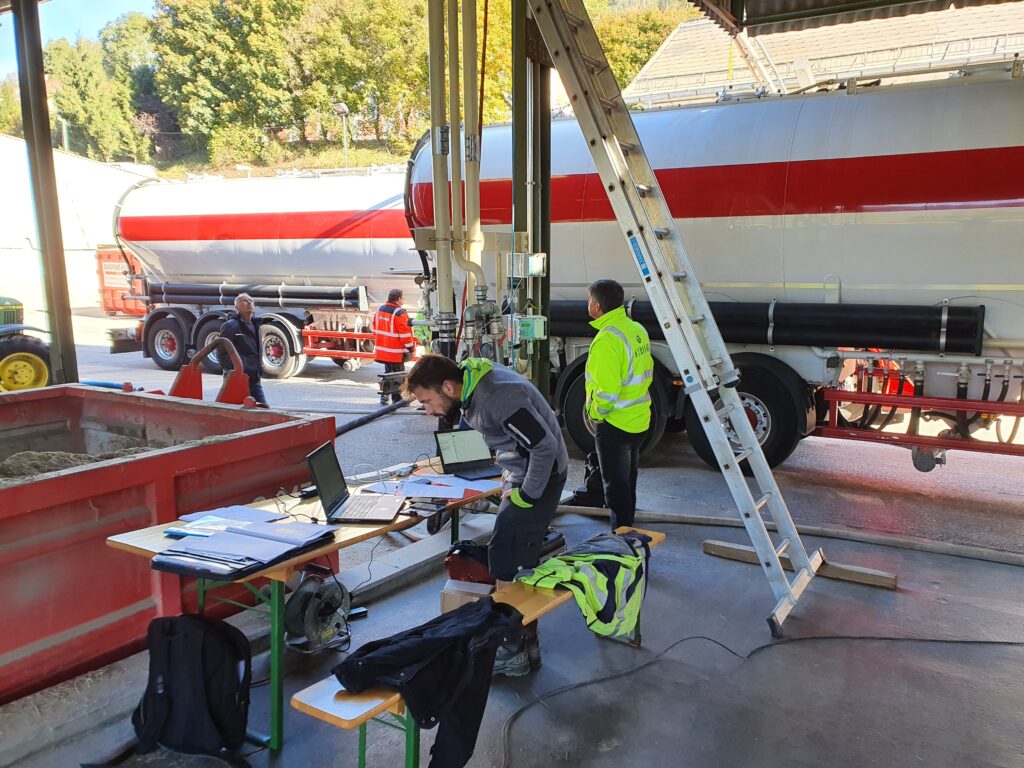
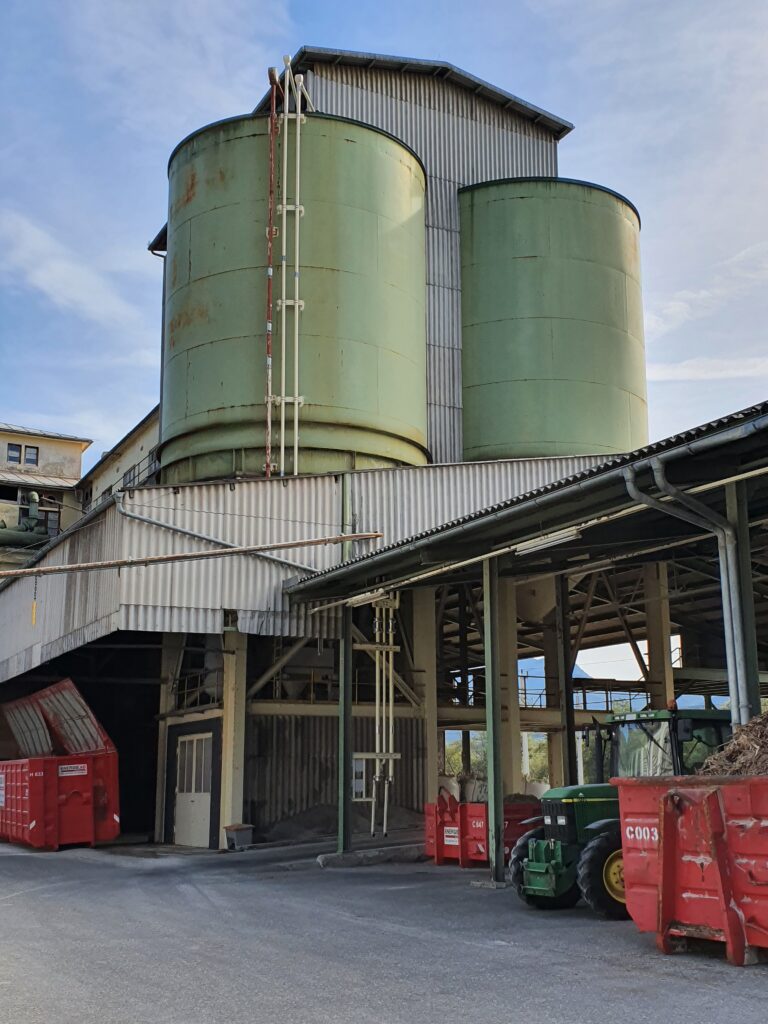
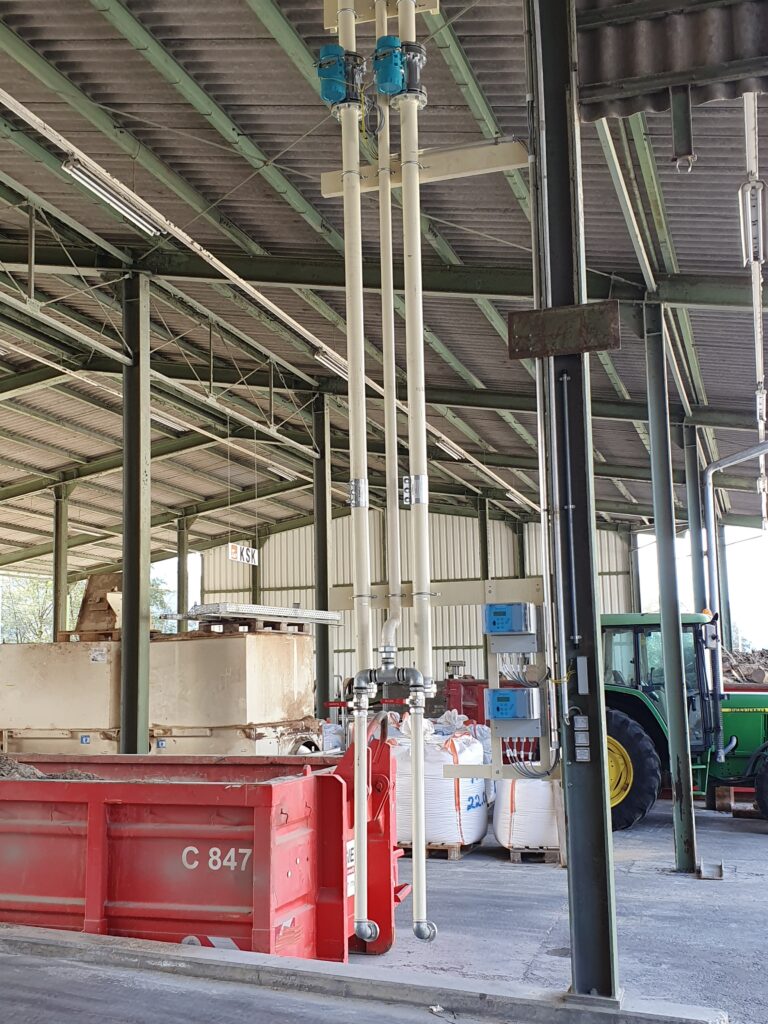
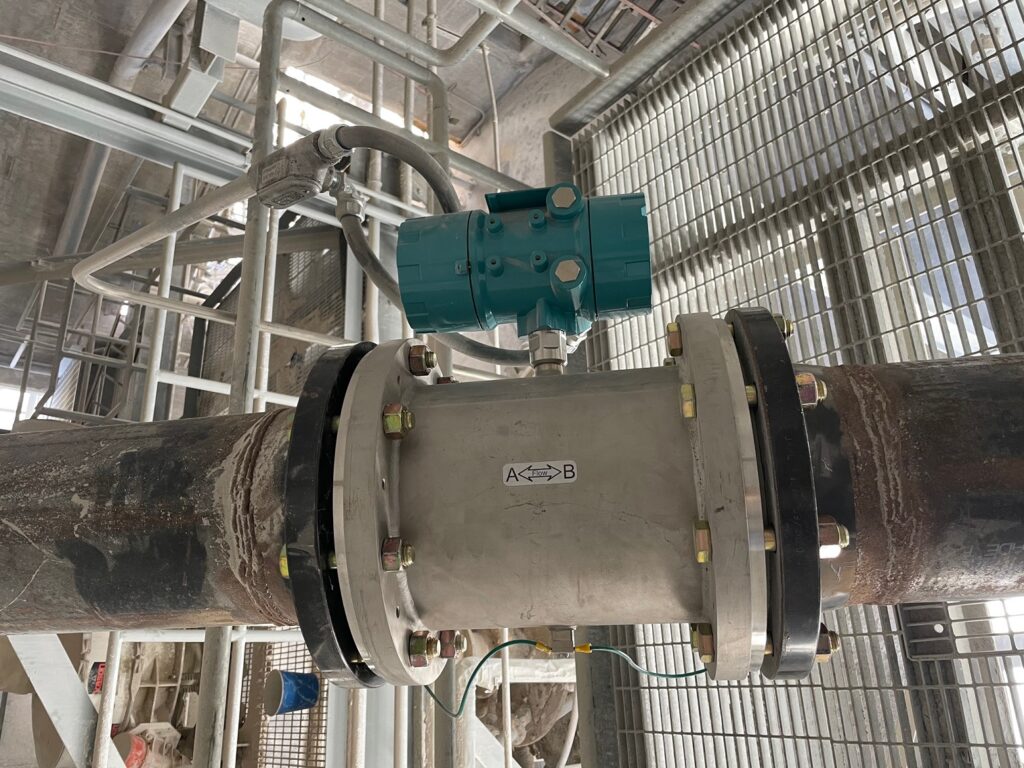
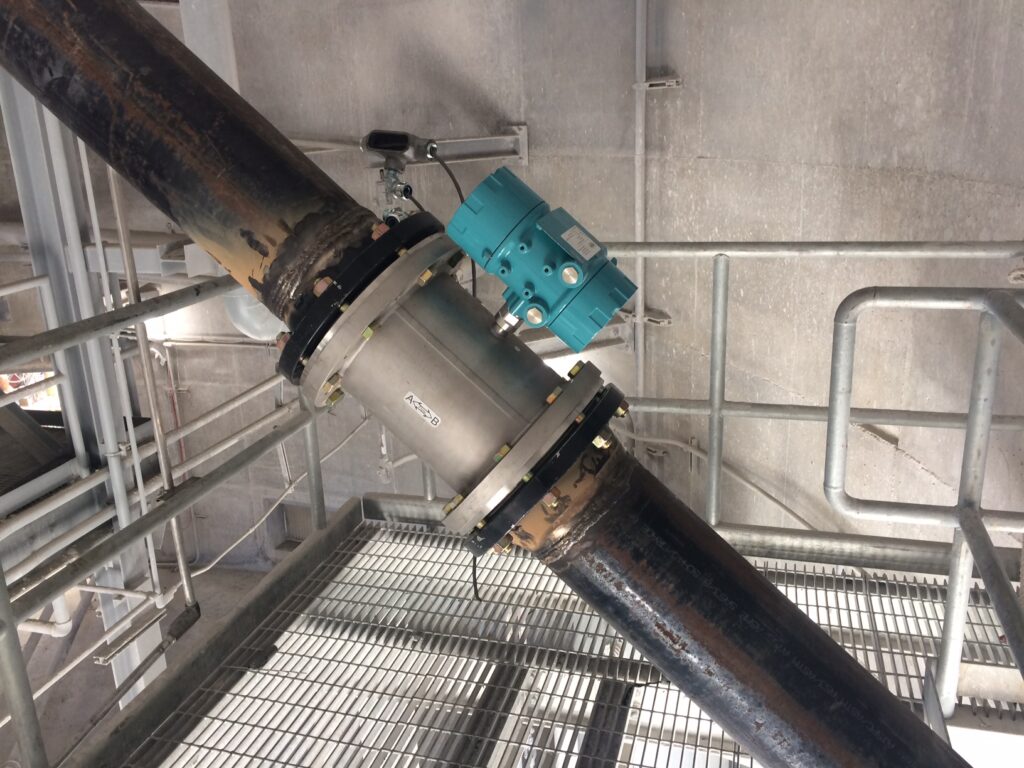
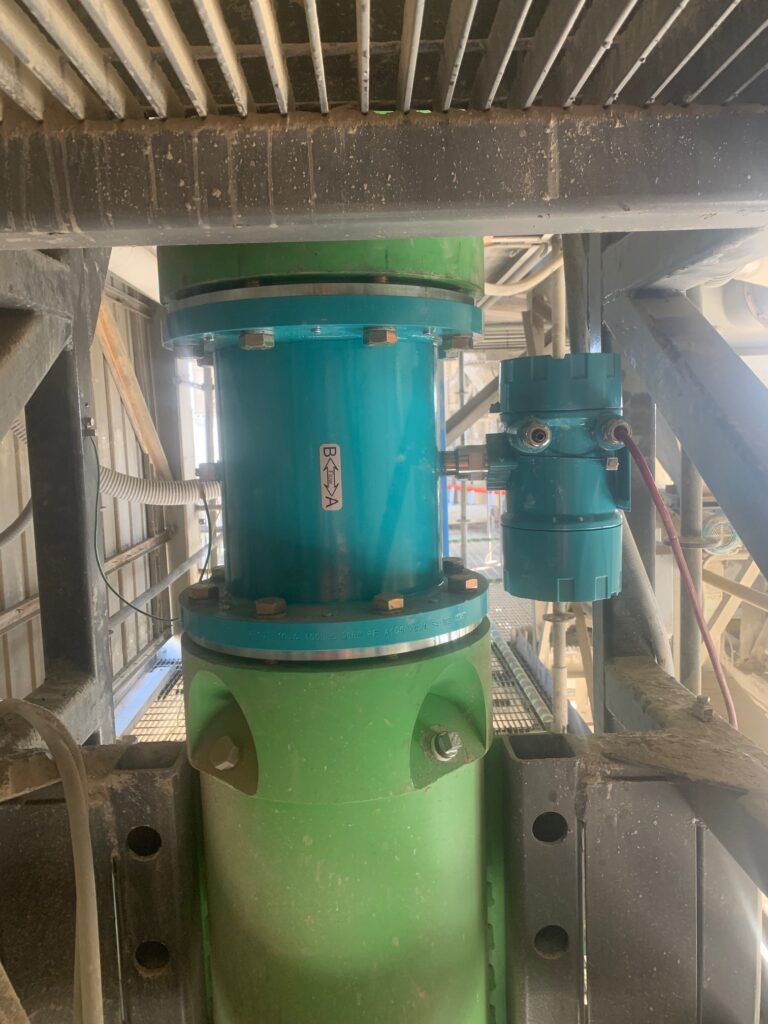
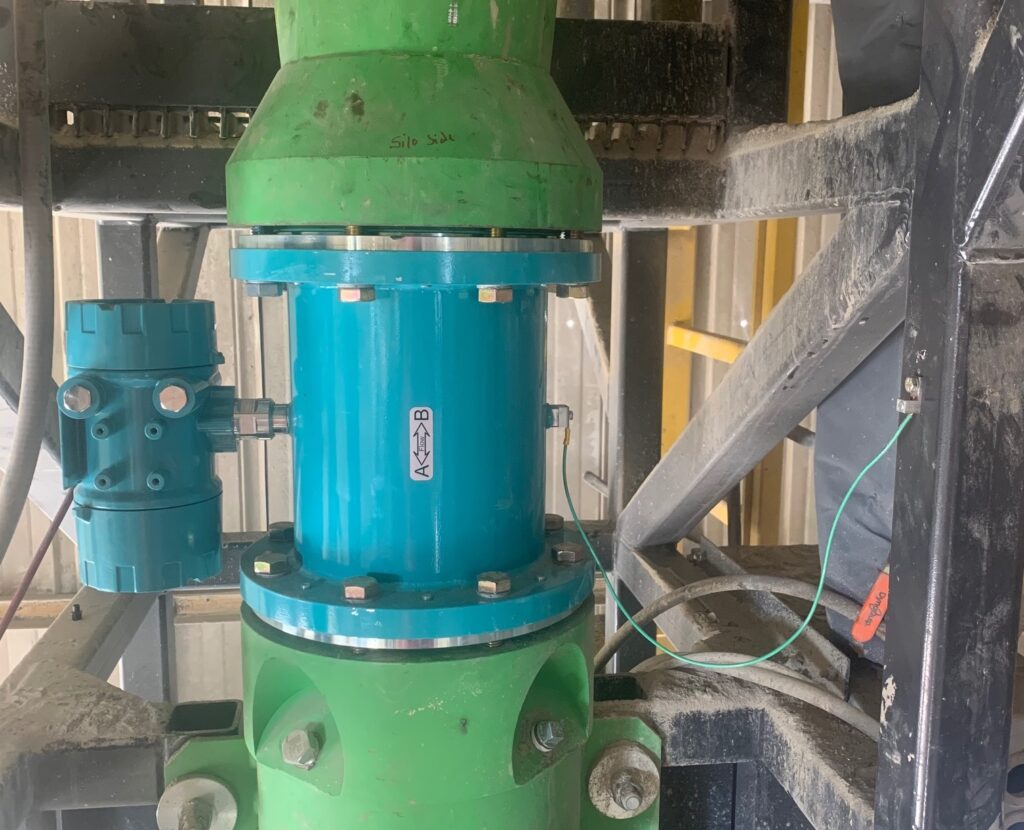
Dmass in real processes






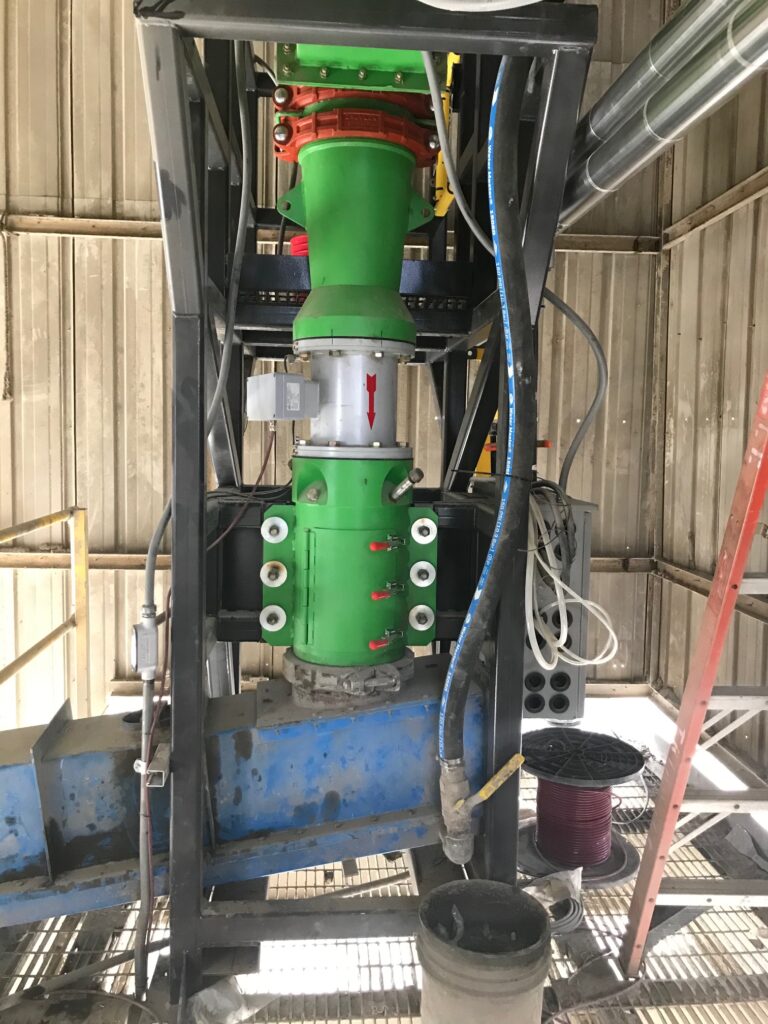


Common questions
Dmass FAQ
What does the Dmass measure?
The mass flow rate of bulk material. It measures the concentration and the velocity of the material at the same time and calculates mass flow from those two values and the diameter of the measuring pipeline.
What materials can the Dmass measure?
Almost any product, such as dust, powders or granulates, transported in pneumatic conveying systems or by gravity in pipelines.
What measuring principle does the Dmass use?
The measurement is capacitive and contact-free. Velocity comes from the time offset between the noise signals picked up on two sensor surfaces.
What flow range does the Dmass cover?
Pneumatic conveying and free-fall processes from 1 to 500 tph.
What can affect the Dmass measurement?
An electrically conductive layer on the inner wall of the sensor pipe, for example from abrasion or moisture. For a reliable measurement, no such layer may form.
What options are available for the Dmass?
High temperature, high pressure, a food-grade liner, a Teflon liner and more.
Talk with GTS
Is Dmass right for your material?
Tell us what you're conveying, the pipe size and how it moves. We'll confirm whether Dmass fits or recommend a better measurement principle.