
Solids flow meters
SlideControl Flow Monitoring on Air Slides
A contact-free microwave sensor that monitors material flow on air slides, giving a 4–20 mA trend signal for flow rate and fast flow / no flow detection for powdery products.
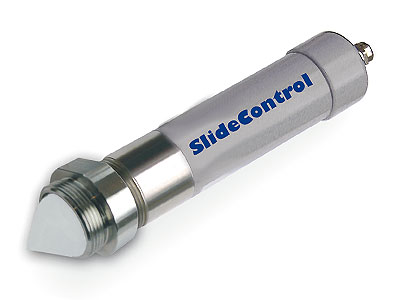
- Contact-free
- Uses microwaves to measure the filling height in the top box
- 4–20 mA trend signal for the flow rate
- Fast recognition of flow / no flow conditions
- Easy retrofitting
Use
Where SlideControl fits
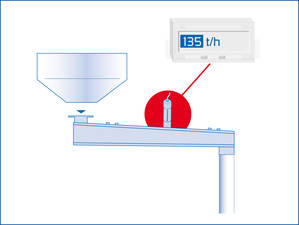
Powdery products are transported on air slides in many industries. Until now it was not possible to get continuous information about the flow.
SlideControl is a sensor that monitors the material flow on the slide without any contact. It is easy to install, including as a retrofit on an existing air slide.
Function
How the filling height becomes a flow signal
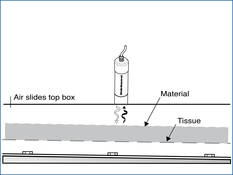
Using microwaves, SlideControl measures the distance between the surface of the flowing material and the sensor, and from that the filling height of the material on the fabric. This filling height is provided as a 4–20 mA signal.
If conveying stops or breaks off, the output signal drops to 4 mA immediately, even if material is still on the slide.
With the slide width and the fluidized density known, a trend signal for the flow rate can be generated:
Q = H × B × ρ × v
- Q = flow rate
- H = filling height
- B = slide width
- ρ = fluidized density
- v = velocity
The velocity of the material flow is assumed to be constant. Parameters such as the slide width and the material density are entered into the transmitter by software.
System
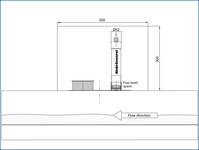
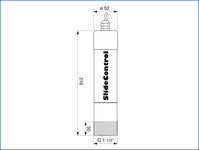
SlideControl consists of a sensor, the associated transmitter and a mounting kit. The distance between sensor and transmitter can be up to 300 m (984 ft). The sensor needs no separate power supply; it is powered by the transmitter. The transmitter is available as a DIN rail version or in a field enclosure with display.
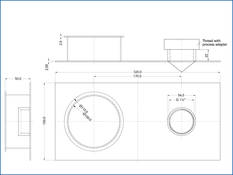
The sensor is installed through the mounting plate, which has a 1½ in process connection for the sensor and a second closable opening for inspection and calibration.

Mounting and installation
Installation and calibration
Once the sensor is installed and connected, the filling height can be measured through the service opening of the mounting plate, for example with a dip stick. Do this while the slide is running, because the sensor only measures the surface level of moving material. The measured filling height serves as the calibration value for the sensor.
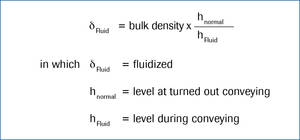
If the fluidized density is to be used to calculate the flow signal, the filling height with conveying switched off also has to be known. The density is determined as shown in the formula.
The bulk density of the material is usually known or can be determined in a laboratory.
After the parameters are entered, the sensor outputs a trend signal for the flow rate. Flow / no flow conditions are also identified reliably.
Technical data
SlideControl specifications
Imperial values are converted from the manufacturer's metric data. Confirm critical values against the product information PDF.
| Housing material | Stainless steel 1.4571 (316Ti) |
|---|---|
| Protection type | IP 65 |
| Process temperature | −20 to +80 °C (−4 to +176 °F)−20 to +220 °C (−4 to +428 °F) with process adapter |
| Ambient temperature | −20 to +60 °C (−4 to +140 °F) |
| Working pressure | Max. 1 bar (14.5 psi) |
| Voltage supply | 18–24 V DC / AC |
| Measuring frequency | 24.125 GHz (±100 MHz) |
| Transmitting power | Max. 5 mW |
| Weight | 1.0 kg (2.2 lb) |
| Dimensions | Enclosure: length 216 mm (8.5 in), diameter 52 mm (2.05 in)Thread: length 30 mm (1.18 in), diameter G 1½ in |
| Supply voltage | 24 V DC ±10% |
|---|---|
| Power consumption | 20 W / 24 VA |
| Protection type | IP 40 to EN 60529 |
| Ambient operating temperature | −10 to +45 °C (+14 to +113 °F) |
| Dimensions | 23 × 90 × 118 mm W × H × D (0.9 × 3.5 × 4.6 in) |
| Weight | Approx. 172 g (6.1 oz) |
| Screw terminals | 0.2–2.5 mm² (AWG 24–14) |
| Current output signals | 4–20 mA (0–20 mA), load < 500 Ω |
| Alarm output | Relay with switchover contact, max. 250 V AC, 1 A |
| Digital interface | Modbus RS 485 |
| Data storage | Flash |
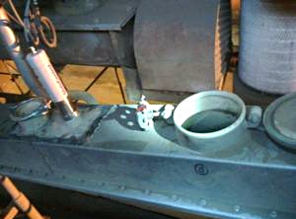
Application examples
SlideControl in real processes
Common questions
SlideControl FAQ
What does SlideControl measure?
The distance between the sensor and the surface of the flowing material on an air slide, and from that the filling height of the material. The filling height is output as a 4–20 mA signal.
Can SlideControl give a flow rate?
It gives a trend signal for the flow rate when the slide width and the fluidized density are known: Q = H × B × ρ × v. The velocity of the material flow is assumed to be constant.
How does SlideControl detect a no flow condition?
If conveying stops or breaks off, the output signal drops to 4 mA immediately, even if material is still on the slide.
Can SlideControl be retrofitted to an existing air slide?
Yes. It installs through a mounting plate with a 1½ in process connection for the sensor and a second closable opening for inspection and calibration.
How far can the SlideControl sensor be from the transmitter?
Up to 300 m (984 ft). The sensor is powered by the transmitter and needs no separate power supply.
How is SlideControl calibrated?
With the slide running, the filling height is measured through the service opening of the mounting plate, for example with a dip stick. That value is used to calibrate the sensor.
Talk with GTS
Is SlideControl right for your material?
Tell us what you're conveying, the slide width and how the line runs. We'll confirm whether SlideControl fits or recommend a better measurement principle.